
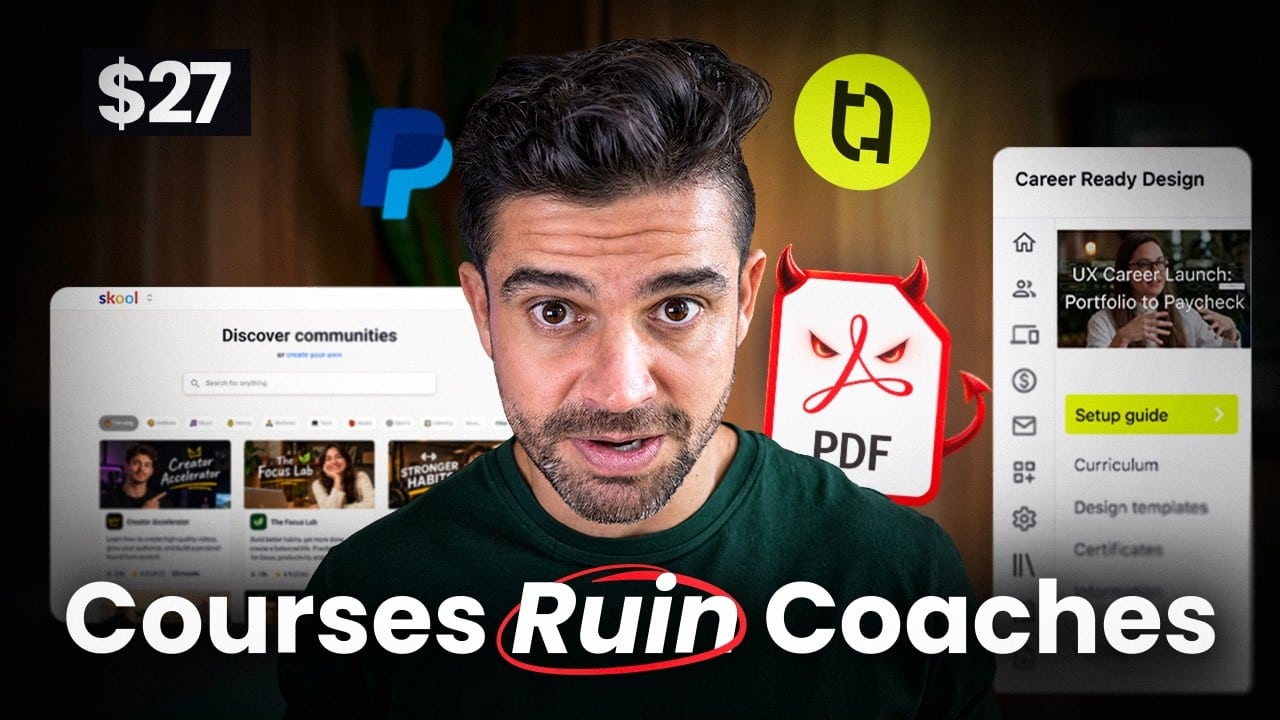
Nobody Wants Your Cheap Course (And You Already Know It)
In the competitive world of online coaching and education, offering a cheap $27 course is not just a bad business strategy; it could be deemed unethical. People who pay, pay attention. If someone invests a sizable amount, they’re more committed both financially and emotionally to put in the work. Zander Fryer argues that when you offer something cheap, you’re not just failing to support your clients, but potentially misleading them. Here’s why you should reconsider low-ticket offers.
- Cheap courses lack engagement. People don’t take them seriously.
- Selling low ticket is bad math. It’s nearly impossible to profit as a beginner.
- High-ticket sales ensure accountability. Both you and your clients are committed.
- The industry supports higher rates. Customers associate higher prices with quality.
The Issue with Cheap Courses
Cheap courses lack engagement. When clients pay a minimal fee, they lack the investment to do the necessary work, leading to poor results. They buy the promise of transformation but don’t follow through, making it an ineffective strategy for real impact.
Why $27 Courses Flop
Selling low ticket is bad math. To make a sustainable income from $27 courses, you’d need enormous traffic, reach that most beginners don’t have. Without a massive following or hefty ad budget, breaking even is a stretch.
Accountability and High-Ticket Programs
High-ticket sales ensure accountability. A $5,000 coaching program commits both parties. Clients put in the effort for the transformation, and coaches are motivated to deliver exceptional results because both have skin in the game.
Market Preference for Premium Pricing
The industry supports higher rates. Consumers equate cost with value. They’re more inclined to see results from a $5,000 investment than from a $27 course. It signals seriousness and commitment.
The Real Cost of Cheap Offers
Price impacts the client’s perception. MIT and Harvard studies show that nearly all buyers of cheap courses don’t finish them. Selling low ticket products can hurt your reputation and foster bad buying habits among clients.
The Beginner’s Trap
Misleading industry advice. Many new coaches have been incorrectly advised to start with free or low-ticket items, hampering their growth. Once these misconceptions are removed, high-ticket programs prove more viable and fulfilling.
Frequently asked questions
Why don’t cheap courses work?
Cheap courses often fail because they lack client commitment. When financial skin in the game is missing, engagement and results suffer, leading people to abandon the course halfway.
How can I switch to high-ticket coaching?
First, reshape your mindset to value your offerings. Then, learn high-ticket sales techniques that focus on delivering transformational results. Building confidence in your offering is crucial.
What are the advantages of high-ticket pricing?
High-ticket pricing ensures greater client accountability and commitment, enabling them to fully engage with the program. It also allows you to focus on delivering quality, not just quantity, in your services.
If you’re ready to make the leap to high-ticket coaching and transform your business, work with us here.

The 7-Step Blueprint to
a Profitable Coaching
Business in the Next
90 Days
RELATED POSTS
Recent Posts
- Nobody Wants Your Cheap Course (And You Already Know It)
- How and where to get your first High-Ticket coaching clients (with 0 followers)
- Give me 17 minutes and I’ll ELIMINATE your limiting beliefs forever
- After Coaching 1,500 People, This Is The Fastest Way To $20K/Month
- 5 Weird Money Habits That Made Me a Multi-Millionaire