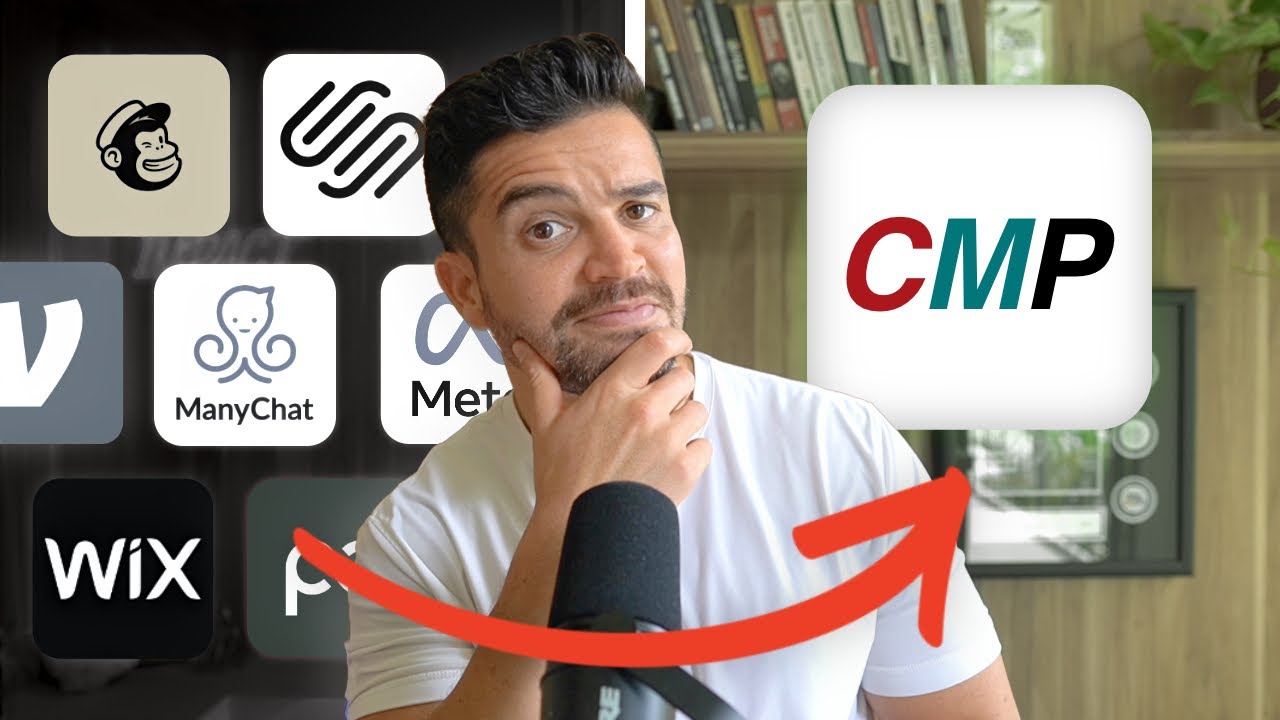
Run Your Coaching Business With 1 Tool
Most coaches are bleeding money on software they don’t need. They’re paying for 11 different platforms, none of them talk to each other, and they spend more time managing tech than actually coaching.
Here’s the better way to run your coaching business with one tool. Below, Zander Fryer walks through every category of software a coach actually needs, and how to stop Frankensteining a business together out of apps built for somebody else.
The seven categories of coaching software you actually need
Every coaching business runs on the same seven jobs: content, scheduling, CRM, payments, contracts, course delivery, and a website. Nail those and you have a real business. Buy a separate starter tool for each one and you’re looking at $400 to $700 a month, easy.
- Content and lead tracking, one place to schedule posts and track conversations.
- Call scheduling, so booking a call isn’t a back-and-forth nightmare.
- CRM, to know when and who to follow up with.
- Payments, a processor and a gateway so you get paid like a pro.
- Contracts, to make the agreement official.
- Course delivery and community, a home for your content once you scale past one-on-one.
- Website and funnels, an online home that actually converts.
Leads and content tracking
You need one place to schedule content and track your data and conversations, not a phone glued to your hand all day. Most starting coaches try to manage every lead and every DM manually. That doesn’t scale.
- Later handles your content scheduling.
- Meta Business Suite covers basic DM tracking, not a favorite, but it works.
- ManyChat automates replies so you’re not tied to your phone 24/7.
Call scheduling
Trying to book calls manually is one of the fastest ways to lose clients. “Does Tuesday at 10 work? No? How about Wednesday at 3? Wait, what time zone are you in?” A scheduling tool ends that loop and makes booking simple, fast, and professional.
- Calendly is perfect when you’re first starting out.
- OnceHub is the go-to internally at High Impact Coaching, but it has advanced features built for bigger teams. For a beginner it’s overkill.
CRM to track leads and follow-ups
The fortune is in the follow-up, and a CRM is the only thing that tells you when and who to follow up with. A CRM (customer relationship manager) isn’t optional. If you don’t track your pipeline, you will lose clients and revenue.
- ActiveCampaign or Kit are simple, reliable, and perfect for a new coach managing a pipeline.
- Ontraport is incredibly powerful and ran HIC’s deals and email sequences for years, but at around $400 a month it’s overkill for beginners.
- Mailchimp gets a hard pass here. Limited features and shaky deliverability.
Getting paid
You need a payment processor and a payment gateway, and Stripe is the go-to processor, so just use Stripe. When a client sends you a Venmo request, that’s splitting a dinner tab, not running a business. Zero professionalism.
- Stripe processes the payment.
- A payment gateway handles subscriptions, invoices, and tracks who’s paid for what. Some CRMs like Ontraport build this in. If yours doesn’t, MoonClerk pairs easily with Stripe.
Contracts
A contract isn’t about trust, it’s about clarity. Coaching without a signed agreement is operating out of a van behind Whole Foods. The contract shows the client you’re professional, clarifies the agreement, and gets them to commit to it in writing. You don’t need anything fancy.
- DocuSign, RightSignature, or PandaDoc all work perfectly.
Course delivery and community
Once you want to scale past trading time for money, you need a home where clients log in, watch modules, and connect with each other. This is optional if you’re only doing one-on-one, but look into it sooner rather than later.
- Skool for simplicity.
- Circle for more advanced features and capabilities.
Website and funnels
Showing up without a website is like showing up without a last name. People might like you, but they won’t trust you. Zander paid thousands for a custom WordPress site early on that took forever and barely converted. You don’t need that today.
- Skip Wix or Squarespace. They look pretty but aren’t built to convert and book clients.
- LeadPages, ClickFunnels, or DropFunnels make it easy to build pages that get people to apply, book, and buy.
One platform instead of seven
None of these tools were actually built for coaches, so you end up Frankensteining a business out of apps designed for e-commerce brands and SaaS companies. That’s the whole problem with the seven-tool stack: $400 to $700 a month and nothing talks to each other.
That’s why HIC built CMP, the Client Magnet Platform. It’s one platform with all of it: social scheduling, CRM, emails, payments, contracts, funnels, websites, courses, communities, and automations, at a fraction of the cost. It includes done-for-you websites and sequences, AI bots, and weekly coaching support, not a random tech guy on the other side of the world. As a coach, you should spend less time on tech and more time coaching.
Frequently asked questions
What software do I actually need to start a coaching business?
You need seven things: content scheduling, call scheduling, a CRM, a payment processor and gateway, contracts, course delivery, and a website or funnel. When you’re starting out, you don’t need the expensive enterprise versions of any of these. Simple, reliable tools are enough until you scale.
How much does coaching software cost per month?
If you buy the starter version of each of the seven categories separately, you’re looking at roughly $400 to $700 a month. Most of that cost comes from stacking single-purpose tools that don’t integrate. An all-in-one platform built for coaches usually runs a fraction of that.
Do I really need a contract to coach clients?
Yes. A contract isn’t about distrust, it’s about clarity. It shows the client you’re professional, spells out the agreement, and gets them to commit in writing. Tools like DocuSign, RightSignature, or PandaDoc handle this for almost nothing.
Once your tech is set up, the next move is building the business and getting more clients. Work with us here.